
4K IPTV UK: What You Really Need for Premium Picture Quality in 2026
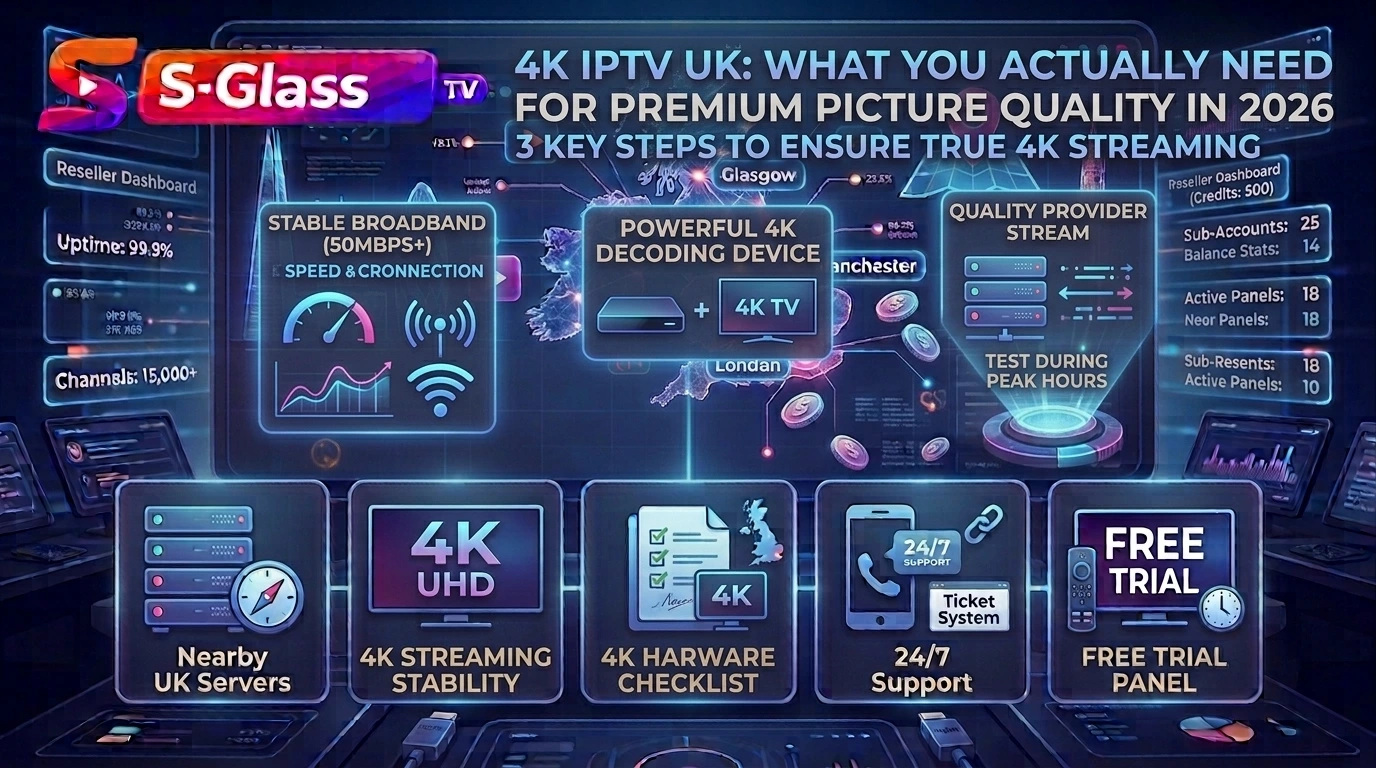
For a typical UK setup, "Premium IPTV UK" gets used as a marketing label more often than it gets properly explained, and most of the time what people actually mean by it is 4K picture picture quality. The catch is that a IPTV plan being labelled 4K doesn't guarantee you'll actually see it — three separate factors have to line up at once. This walkthrough focuses on exactly what those are, whether the upgrade is worth it, and how to resolve the buffering that usually gets blamed on the IPTV plan when it's really somewhere else in the chain.
What Does "Premium IPTV UK" Actually Mean?
From a day-to-day viewing perspective, premium tiers usually bundle a few factors together — more simultaneous internet connections, a larger on-demand library, faster support, and 4K availability. Where your aim is to the full breakdown of what separates premium from budget across all of those factors, our walkthrough to UK IPTV IPTV plan cost and premium tiers covers it in depth. Here the emphasis is on the picture-picture quality side: what it actually takes to get true 4K, consistently.
4K IPTV UK: What You Need to Actually Get It
Broadband Speed Requirements
For most home users, a steady 4K playback stream generally needs at least 25–30 Mbps dedicated to that one playback stream, with some headroom left over if anyone else in the house is also online. Anything close to your line's absolute maximum during peak evening hours is a recipe for the playback stream quietly dropping back to HD.
Device Decoding Power
The useful point here is that not every playback streaming device can actually decode 4K programming consistently. Budget playback sticks and older Android boxes often struggle, even on a fast internet connection, because the hardware itself can't keep up. A mid-selection or stronger Android TV box or a recent Smart TV is generally needed for consistent 4K playback.
Provider-Side Server Quality
In a real-world setup, even with a fast internet connection and a capable streaming device, the source playback stream still has to be encoded and delivered at genuine 4K picture quality without the service provider's servers buckling under peak demand. This is the piece viewers have the least visibility into, which is exactly why testing during peak hours matters more than verifying the channel line-up.
HD vs 4K: Is the Upgrade Worth It?
In practical terms, on a smaller screen or at normal viewing distance, the difference between a steady HD playback stream and 4K is often smaller than marketing suggests. The upgrade pays off most plainly on a larger screen, viewed up close, on programming that's genuinely mastered in 4K. A rock-solid HD playback stream will almost always look and feel stronger than a 4K one that keeps stepping down under pressure.
How to Test Whether Your Setup Can Handle 4K IPTV
- Run a speed test on the actual streaming device you playback stream on, not just your router, during peak evening hours
- Confirm your streaming device's spec sheet explicitly lists 4K hardware decoding support
- Test a 4K channel during a busy viewing period, not a quiet weekday afternoon
- Use a wired Ethernet internet connection if you're borderline on Wi-Fi speed
Best Premium IPTV UK: Picture Quality Checklist
- Confirm which particular live channels are actually available in 4K, instead of assuming the whole package is
- Check simultaneous internet connection limits if multiple people in your household playback stream at once
- Test picture picture quality during your own peak viewing hours before committing to a longer plan
- Pair your IPTV plan with a streaming device that can genuinely decode 4K, not just one that claims to
Common Reasons 4K IPTV Streams Buffer (and Fixes)
- Wi-Fi congestion: switch to a wired Ethernet internet connection where possible
- Underpowered streaming device: verify whether your box or Smart TV genuinely works with 4K decoding
- Peak-hour server load: test at various times to see if the problem is consistent or particular to busy periods
- Background bandwidth run: pause other downloads or playback streams on your network while viewing
Frequently Asked Questions
For a typical UK setup, you will need a service provider whose plan explicitly covers 4K live channels, alongside a fast enough internet connection and a capable streaming device — the IPTV plan is only one element of getting true 4K.
Around 25–30 Mbps dedicated to the playback stream is a reasonable minimum, with more headroom needed if other streaming devices are active on the same network.
For most home users, usually one of three factors: your streaming device can't decode 4K properly, your internet connection doesn't have enough headroom during peak hours, or the service provider's servers are struggling under demand at that particular time.
The useful point here is that no. Budget playback sticks and older hardware often can't decode 4K consistently, even with a fast internet connection. Check your streaming device's specifications before assuming it works with 4K.
In a real-world setup, the answer depends on your screen size and viewing distance. On a larger screen viewed up close, the difference is noticeable; on a smaller screen, a steady HD playback stream is often just as satisfying.
Ready to Move Up to Premium Quality?
In practical terms, browse our IPTV IPTV plan plans to verify 4K channel availability, pair it with a suitable IPTV box, and follow our installation walkthrough to get set up properly.